 editor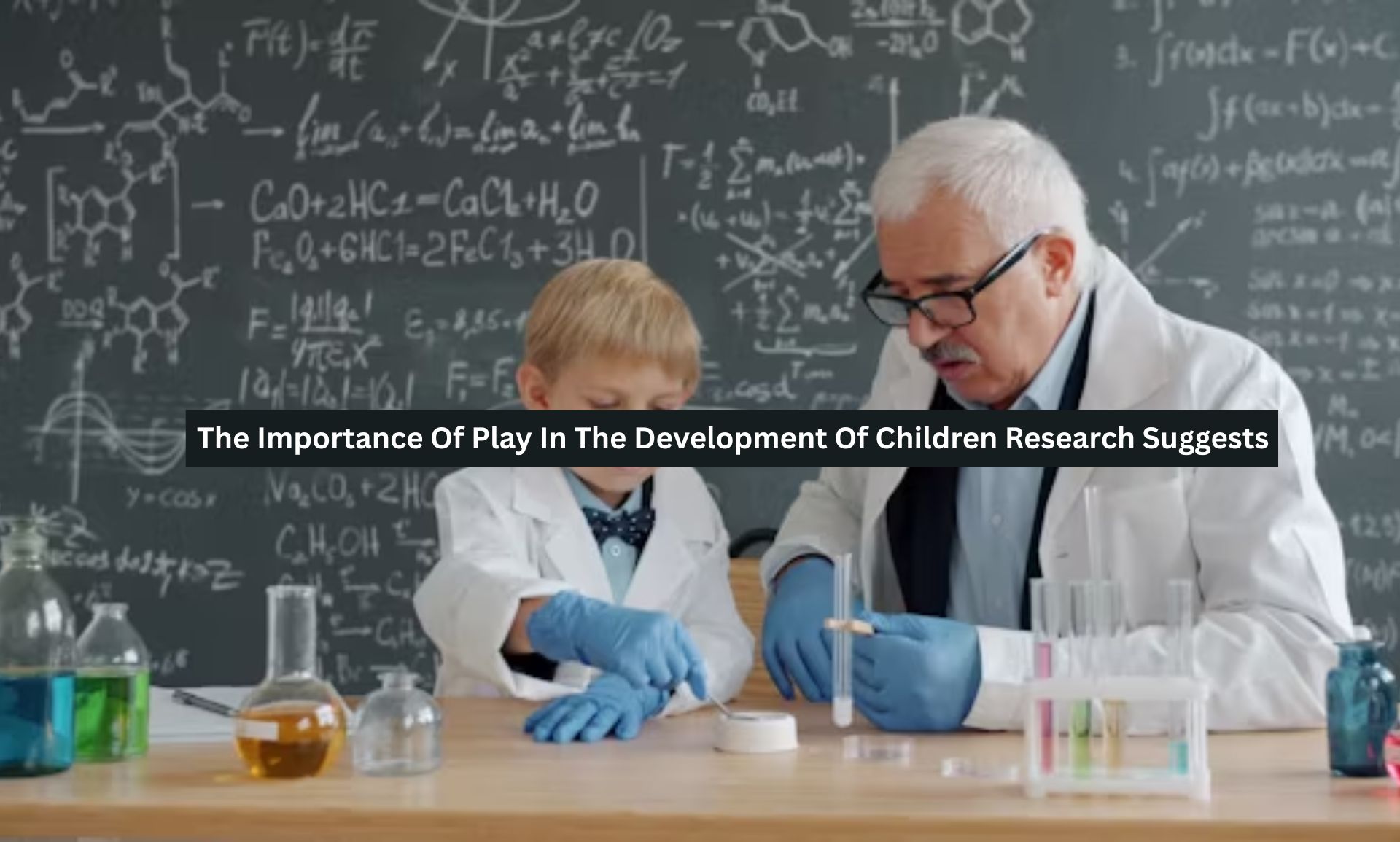
Do we tend to see it as a diversion, an amusement separate from the serious business of life and learning? Maybe you or someone you know has said things like, “Oh, they’re just playing.” Children’s growth and development are greatly impacted by play that is unstructured or spontaneous. Children learn about the world, themselves, and one another through unstructured play experiences.
Expert perspectives on the significance of play for children’s learning are considered in this discussion. The concept of play is the subject of a wealth of complex and extensive theories and research. This discussion is a general overview of some of this literature.
In everyday conversation, we use the term ‘play’ to describe a wide variety of activities and experiences. We talk about playing sports, role-playing, pretend play, video games, and board and video game games. The word play means many different things to many different people.
Psychologists, play scholars and educators are more specific about what play is. They identify a number of characteristics that differentiate play from other more structured and organised activities.
Is Play A Waste Of Time?
In our adult world, we often emphasise hard work. Our primary focus is on accomplishing our objectives and performing our duties. Play may be viewed as a healthy break at best, or as a complete waste of time at worst, unless it contributes to our objectives and priorities. If we view children’s play from an adult’s perspective, we may consider organised activities such as sport to be useful, but view spontaneous play as a waste of time.
In the world of the child, things are different. Play is not seen as a waste of time in a child’s life. For several decades research has been highlighting the benefits of children’s play. According to this research, unstructured play is considered to be a universal activity that is integral for the physical, social, cognitive and emotional well-being of children. Play is important for promoting healthy child development while facilitating children’s learning.
So, according to research, unstructured play activities are not a waste of time.
How Play Contributes To Development
The Value Of Play
Play helps children develop and fine-tune their physical, social, cognitive and emotional abilities and skills.
Physical Development
Children gain strength, agility, coordination, and balance through physical activities like running, jumping, climbing, dancing, and playing with objects.
Social Skills
Play can be solitary, particularly for younger children. Play may also be a group activity through which children learn the skills for social interaction. They develop social skills such as sharing, cooperating, taking turns.
Cognitive Development
Play promotes cognitive skills and development in children. Both individual and group play develop skills such as language, critical thinking, reasoning, remembering, learning and paying attention.
Emotional Development
Play can help children to explore and understand their own feelings and those of others. They learn to identify with both themselves and the world around them through imaginative play. Role play enables them to understand other perspectives.
Play experiences generally incorporate several of these areas of learning and development. A group of kids kicking around a blow up ball will be practicing their gross motor skills. At the same time, as each child plays, the group interacts. They will be learning social skills such as teamwork and cooperation. They will be using their cognitive skills as they develop strategies to move the ball to and around other players.
Children learn about negotiation, cooperation, sharing, and taking turns as they work together to build an obstacle course at home out of cardboard boxes. They also improve their coordination and fine motor skills. Play lets children practice and extend skills that they learn in more structured settings. They might practice skills they have learnt during basketball training. But because there are no external rules in free play, they might try things that aren’t allowed in formal training, like standing with their back to the hoop and trying to shoot a three-pointer or using the basketball as a soccer ball. So play is a universal activity that is important for children’s physical, social, cognitive and emotional development.
Playing Ages And Stages
From infancy through early childhood education and into adolescence, children engage in a variety of playforms. Play for infants and babies involves simple, repetitive activities and interactions. These become more diverse and complex as the child grows.
Babies And Infants
Play at this stage is frequently a solitary activity. Babies are becoming aware of, and beginning to explore the world around them. They do this with repetitive activities such as putting their hands in and out of their mouth, or patting a mobile. Such activities, while simple, are developing physical coordination and cognitive skills such as concentration. Play items can be as simple as spoons, plastic containers and scrunched up paper. Socially, babies seek to engage others in simple interactions like smiling, blowing raspberries and peek-a-boo. They are seeking responses such as smiles and laughing. This is a time when strong parent child bonds can begin to develop.
Toddlers
Toddlers are becoming more physically active. They like to run, jump, and climb. They are also becoming aware that others also play. They may take on the role of an interested onlooker watching their peers play. They frequently interact with other toddlers while playing together. Role-playing is also an element of toddler play as they start to imitate adults doing housework, fixing things or using the phone. Toddlers don’t need many toys. Things such as simple jigsaw puzzles, matching games, blocks and common household objects are often utilized as playthings.
Preschool
During the preschool years, children move from playing alongside other children to engage in more interactive, mutual play. At the same time, they started to assert their independence. They will often insist on doing things for themselves. They don’t want help building the tower! They are developing skills such as physical coordination, communication, sharing, and problem solving. They are becoming more effective in articulating their needs.
Those In School
School age children are becoming increasingly independent while actively participating in play that is interactive and cooperative with others.
Assisting Children’s Play
Even though children initiate and direct free play activities, parents can still participate. Parents can actively encourage their children to play. They can offer secure play areas where kids can explore, test their limits, and test their limits. Parents can even join in their kids’ play. They do need to ensure that they are participating rather than controlling or competing. This can foster strong parent child bonds.
Conclusion
Play is important for children’s learning and development. Through play, children develop their physical, social, and emotional abilities and skills. It is not a waste of time. Play is spontaneous, unpredictable, controlled by the players, and fun. Given the importance of play, perhaps we should all make time to play a bit more.